
Finding Dearborn Heights Resident Records
Dearborn Heights resident research works best when the first search fits the question. A Dearborn Heights address points first to the city assessor and county parcel map. A known person can be checked through Michigan Voter Information Center, then compared with a property, court, or deed record. A past household belongs at the library archive rather than a modern portal. Wayne County is the county seat system, while city records, state systems, and library collections each have their own custody rules. A result from one index is a lead, not a complete household list.
Use the clearest Dearborn Heights fact already in hand and keep a small source note for each result. Parcel, legal description, court number, directory year, and repository name make later checks much easier. The order below keeps current and historical work separate while leaving a route for records that do not appear on the web.
| Official-record route | Commercial finder category |
|---|---|
| States the custodian, record type, access limits, and request route. | May combine public filings, marketing data, and data-broker records into a report. |
| Can provide a source document or a defined records request process. | Can be stale, incomplete, or mismatched and may not identify the originating source. |
| Uses the record's own legal restrictions and correction channel. | Removing a commercial report does not correct the original public record. |
- Check the Dearborn Heights BS&A property hub by address, owner name, or parcel number when the question concerns a property.
- Use the Michigan Voter Information Center for a matching individual, using name, birth month and year, and ZIP.
- Search the Wayne County deed index for recorded parties, then compare the legal description with the parcel.
- For an earlier household, ask the Dearborn Heights library archive for its directories and street guides.
- When the needed record has no public index, use the custodian's counter, mail route, or Michigan FOIA process for an existing record.
Dearborn Heights Residents Record Keepers
No agency keeps one master roll of all Dearborn Heights residents. The city assessor supplies the parcel and owner layer. The Register of Deeds records transfer parties and legal descriptions. Michigan's election system supplies a person-level registration lookup, while court clerks and the library keep different kinds of confirmation or historical evidence. The street-by-street method belongs on the Dearborn Heights street directory page; these office cards help identify the right counter before a search begins.
Wayne County Register of Deeds
400 Monroe Street, 7th Floor
Detroit, MI 48226
313-224-5854
Dearborn Heights Clerk and Elections
6045 Fenton
Dearborn Heights, MI 48127
313-791-3439
Dearborn Heights Residents by Parcel
The BS&A municipal hub is Dearborn Heights' main property-search starting point. Its verified quick routes are Address, Name, and Parcel Number. A parcel record can connect a situs address, owner name, parcel identifier, tax context, sales, and related city modules, subject to the record and account access level. The published sample uses the parcel format 33 038 01 0479 000. A mailing address is a tax-notice field, so it can be useful for following a record trail but cannot establish that every person at an address lives there.
Claiming up to five properties is described as free, while an unclaimed sample detail screen offered a $6.95 purchase route. The Dearborn Heights city assessor sets assessed and taxable values, handles transfers and exemptions, and can answer questions that the portal does not expose. For a current-name question, retain the parcel number and compare it with a voter or deed record rather than relying on one card.
| BS&A search control | Type | Verified use |
|---|---|---|
| Address | Quick-search route | Find a property by its street location |
| Name | Quick-search route | Search an owner-name lead |
| Parcel Number | Quick-search route | Open a known parcel record |
| Claim property / buy detail | Account or payment action | Access depends on property-claim status |
The Dearborn Heights BS&A property hub shows the municipality's property-search entry points.
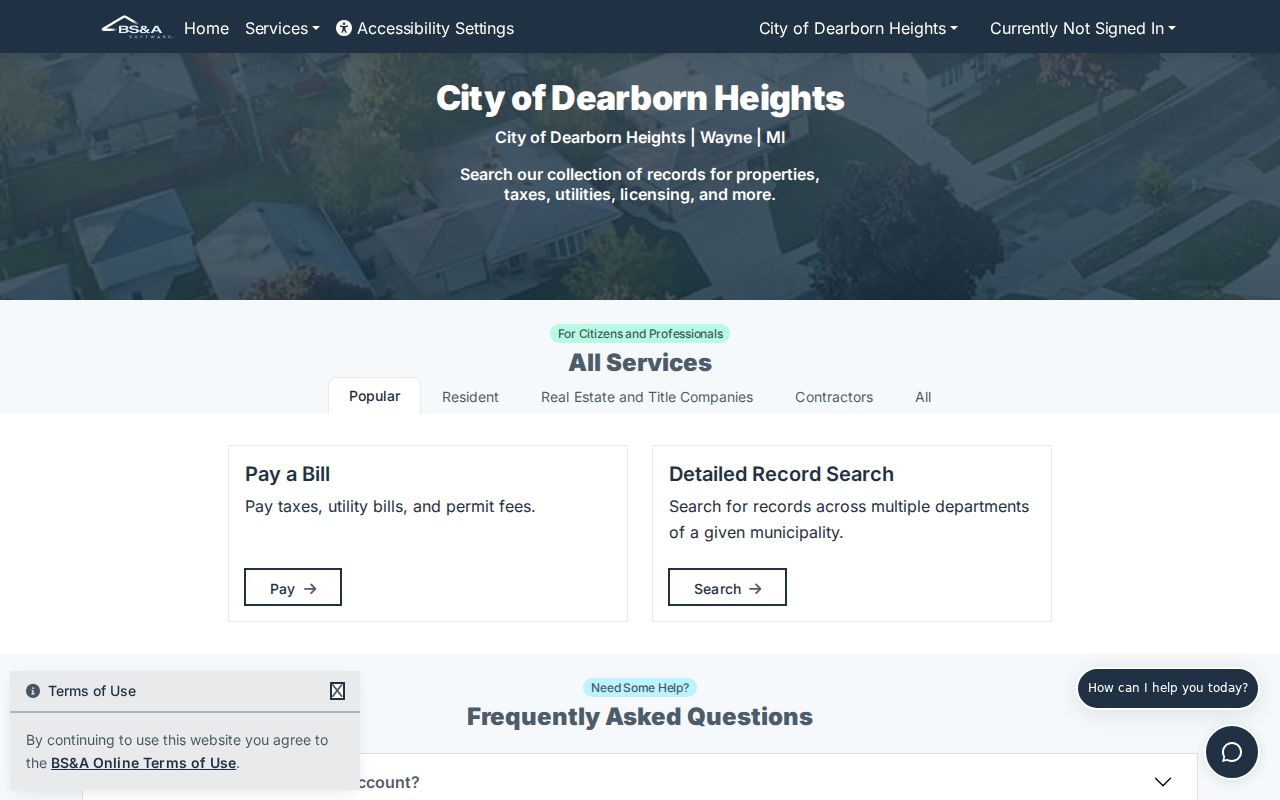
The visible address, name, and parcel routes make it clear why a parcel identifier is the useful bridge to deed and map records.
Dearborn Heights Residents and Voter Matching
Michigan Voter Information Center, commonly called MVIC, is built for an individual Dearborn Heights match rather than a browseable resident roll. Its documented inputs are first name, last name, birth month, birth year, and ZIP Code. A matching result can supply registration, polling-place, sample-ballot, or ballot-status information. It is useful when a name and age range are known, but no match can also reflect a spelling difference, moved or inactive status, or a protected record.
The statewide Qualified Voter File is a separate written-request channel. MCL 168.509gg protects phone and email information, full birth-date components, signature, driver-license or state-ID data, and other sensitive fields. Michigan's Address Confidentiality Program also protects eligible participants. These limits are part of the record, not an invitation to infer a private address from an omitted result.
Dearborn Heights Resident Trails in Deeds
Wayne County's public land-record search is party centered. A free public search gives a name listing; registered or pay-as-you-go access is used for images and printing. For a parcel, start with the current owner as grantee, identify the acquisition deed, then search the seller as a prior grantee. The legal description, subdivision, lot, or block should travel with each step because an address alone may not appear in an older instrument.
The county search-services page says recorded-document search reaches January 1, 1960, while the county home page separately describes online records as post-1986. Preserve that difference in a research note and use the office kiosk or mail search for earlier material. Wayne reports a large annual document volume, so a party role, time frame, and legal description are practical checks against a broad surname result.
Dearborn Heights Resident Court Indexes
The statewide Michigan Courts case search can be searched by a last or business name, optional first and middle names, birth year, or a case-number route. Public results may show the county, court, case type and number, filing and closing dates, status, disposition, and selected related fields. The 20th District Court serves Dearborn Heights, but its city page does not identify a local public name-search form. The clerk counter or phone is the route for the actual local file.
A court search is an index, not the court record. Adoption, juvenile, sealed, suppressed, expunged, protected-order, and other excluded categories do not provide a complete Dearborn Heights name result. For copies, filings, or a certified record, contact the court of record. Wayne Circuit and Probate records use separate county channels, and older files can require an archive or copy request.
Current Dearborn Heights Resident Directories
Current Dearborn Heights resident directories are really several narrow record sets. Each set answers a distinct question. Property and tax sources are strongest for parcel ownership. MVIC is designed to return information for an individual voter match. Recorded deeds identify parties to a transaction, not a whole household. The city staff directory is a role-and-contact resource, while the library's collections are historical. Keeping those boundaries clear makes the results more useful and avoids treating a public name as proof of present residence.
| Source | Who It Lists | Keeper | Access |
|---|---|---|---|
| BS&A parcel search | Named owners and property records | Dearborn Heights Assessor | Address, name, and parcel routes; detail access varies |
| MVIC lookup | Matching registered voter information | Michigan Secretary of State | Individual lookup; protected fields remain closed |
| Wayne deed index | Grantors, grantees, and recording trail | Wayne County Register of Deeds | Free listing; paid image, kiosk, and mail routes |
| City staff directory | City roles and public contact information | Dearborn Heights | Free online directory |
| Dearborn Hills Civic Association | Public joining and contact information | Private association | No public member roster |
The best next step depends on the record. An owner record may lead to a deed, a voter match may need an address or date check, and an old directory name may need a later court, probate, or vital-record confirmation. A single-person verification should compare separate sources rather than treating a result as conclusive.
Dearborn Heights Resident Records by Request
Not every useful city record is posted online. The Dearborn Heights FOIA process is the documented fallback for existing city records that are not exposed through BS&A. A written request should identify the existing record by address, parcel, date range, or record type. Michigan Freedom of Information Act, 1976 PA 442, MCL 15.231 et seq., does not require a special statewide form. The city normally responds within five business days and may take a ten-business-day extension.
City procedures describe copy, inspection, deposit, and appeal rules. A request cannot require the city to create a new list, and exemptions still apply. For records held outside the city, use the custodian's own channel: Wayne's recorder mail service for older deeds, the clerk records room for court files, or a library reference request for a collection that has not been digitized.
Note: Request an existing record by parcel, address, date range, or file number so the proper Dearborn Heights or Wayne County custodian can locate it.
Dearborn Heights Residents in Library Collections
The Dearborn Heights Public Library archive has a local grouping that ordinary web searches cannot replace: directories and street guides, the Dearborn Heights Leader, cemetery material, a school collection, the 1960 Charter, and civic brochures. Its directory and street-guide collection is described as spanning 1930 through 1967. The archive page does not publish a verified publisher-by-year list or a sample page, so the reference desk is the right source for an exact edition, shelf location, or reverse-directory question.
Caroline Kennedy Library and John F. Kennedy Jr. Library both provide local reference access, and the Dearborn Genealogical Society offers library help on a varying schedule. If a past document uses Dearborn, Dearborn Township, or Inkster rather than Dearborn Heights, nearby Dearborn library and museum collections can provide the cross-border historical context.
Historical Dearborn Heights Resident Directories
For historical Dearborn Heights residents, annual directories and street guides supply a dated address clue rather than a continuous household history. The library confirms a 1930–1967 collection span, and the Dearborn Heights Leader runs from 1962 through 1975. Wallaceville and Nowlin cemetery collections, the Wallaceville School Collection, and the 1967 League of Women Voters Guide can add local context. A name or address should still be checked against a deed, census, obituary, probate record, or another dated source.
Older material may be cataloged under Dearborn Township, Dearborn, or Inkster because Dearborn Heights formed from separated township sections and an annexed strip. The library archive includes a 1960 Charter, while the 2007 Master Plan says incorporation was in 1963. Cite the document and its jurisdiction label rather than forcing those sources into one date. The full shelf, tracing method, and collection limits are covered on the Dearborn Heights city directory page.
Dearborn Heights Resident Privacy Boundaries
Public records do not create a complete public directory. A property owner may not be every occupant. MVIC is not a street-wide voter roster. A court index leaves out sealed and other excluded matters, and current birth records have statutory eligibility limits. Michigan's Address Confidentiality Program gives eligible survivors a designated address and mail-forwarding protection, while MCL 168.509gg shields sensitive voter data. Utility-customer and casual DMV-address lists are not public resident sources.
Use a record for a lawful personal purpose, keep sensitive facts out of notes, and confirm any important result with its custodian. Repeated, unwanted contact or conduct that causes distress can violate Michigan's stalking law, MCL 750.411h. Record research should never be used to stalk, harass, or harm a person.
- Parcel
- A numbered unit of land used by the assessor, GIS, and tax systems.
- Situs address
- The physical location of a property, distinct from a tax mailing address.
- Index
- A searchable record listing that may point to, but is not always, the original image or file.
- Criss-cross directory
- An address-oriented directory format that may link a street location to a household entry when a volume includes it.
Dearborn Heights Resident Safety Searches
Michigan maintains a separate Offender Tracking Information System for state custody information. OTIS provides surname, given-name, offender-number, sex, race, age, status, and marks fields. It is not a Wayne County jail roster, and a missing result does not establish that a person has no local, federal, juvenile, or otherwise excluded record. Match a common name carefully before relying on an identity result.
Michigan OTIS search presents a field-based state offender search.
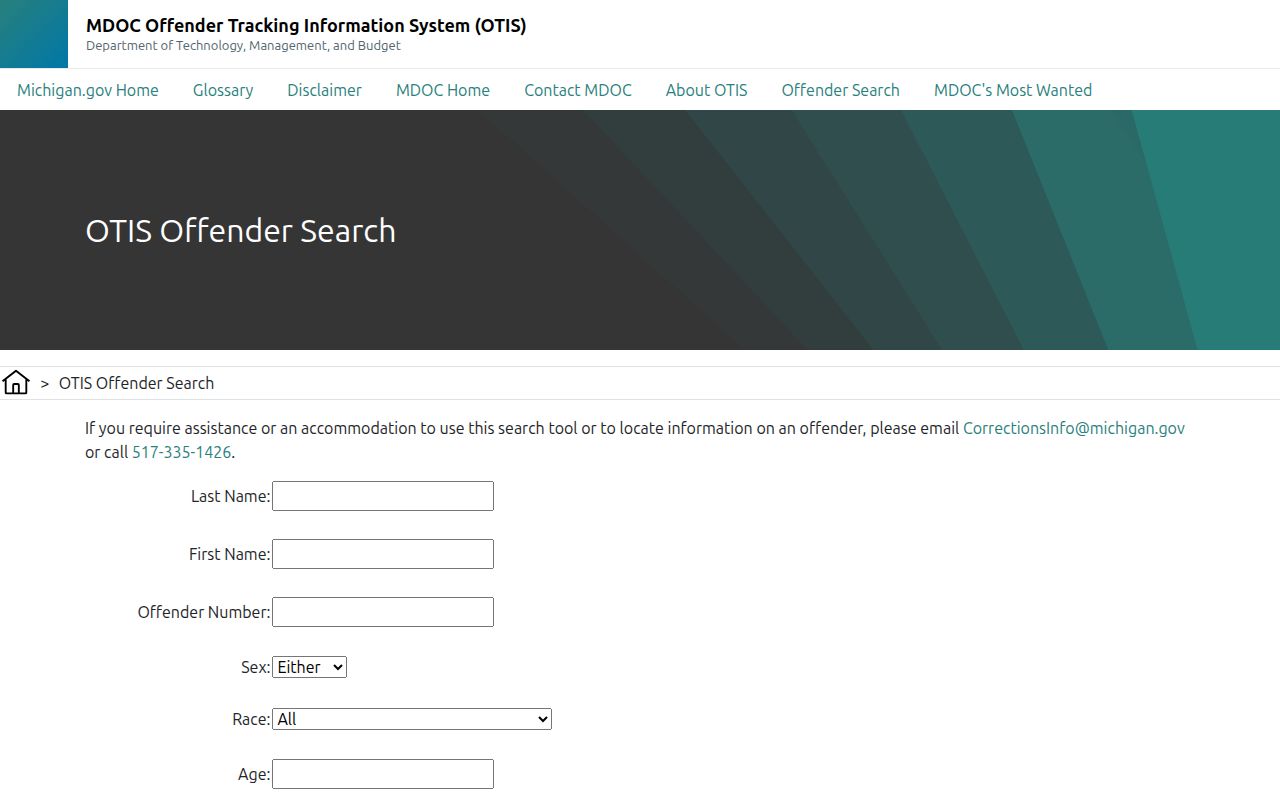
The form illustrates why several identity fields are better than a surname alone when checking a statewide custody record.
The Michigan Public Sex Offender Registry has different name, number, address, city, county, ZIP, and neighborhood-radius modes. Registry material has its own legal notices and is not a complete criminal-history file. Victim information and juvenile records are not public, and the registry is not a substitute for the court of record.
Michigan's registry search includes location and name search modes.
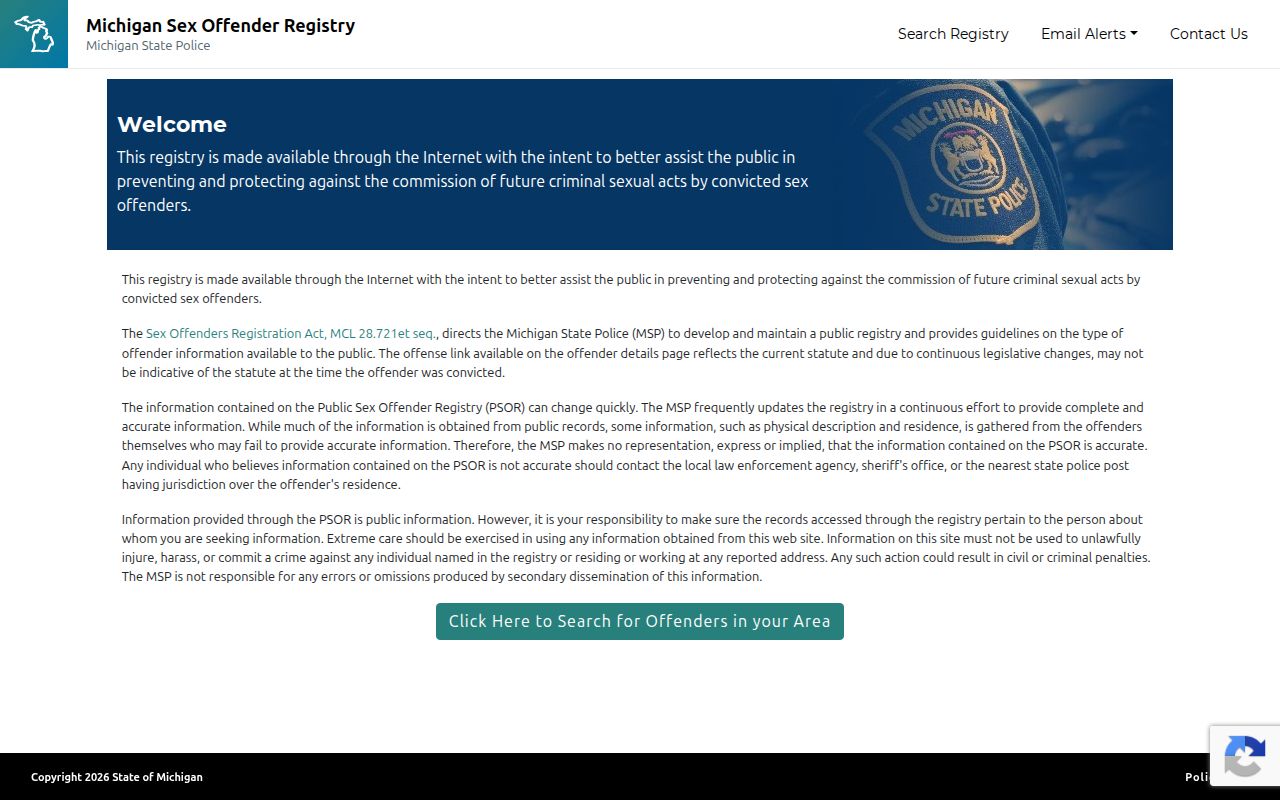
The separate registry interface reinforces the need to keep program-specific results in their proper legal and factual context.
Dearborn Heights Residents and Property Alerts
Wayne County's free GovOS Property Alert service is a current practical addition to a deed-research routine. It sends an email when a document is recorded against a subscribed name or property. It is a notification service, not a historical deed search, a fraud-prevention guarantee, or a replacement for reviewing a recorded document. Enroll through the official county channel rather than responding to a mailed offer that uses a parcel number or asks for an inflated copy fee.
Wayne County Property Alert enrollment is the official route for recording notifications.
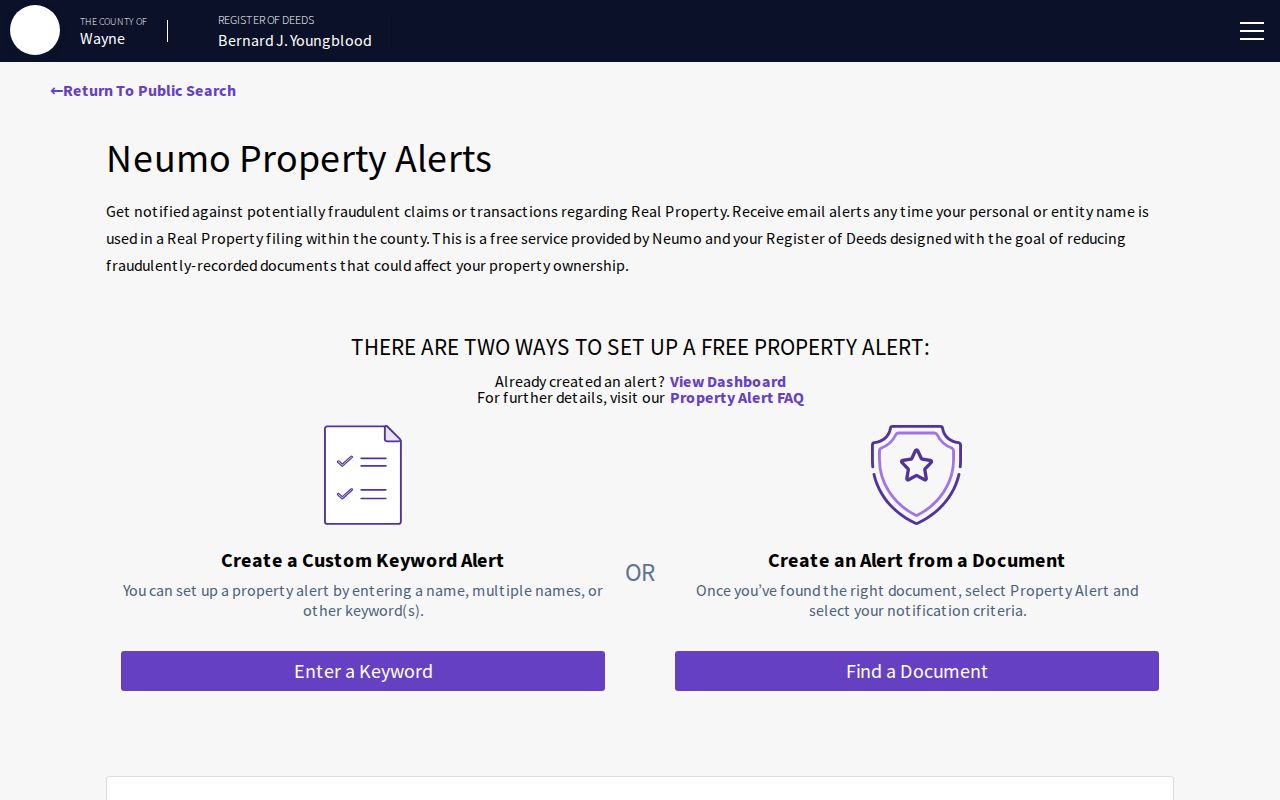
The enrollment screen is separate from the deed index, which is why an alert should be paired with a saved record search and custodian contact details.